Product Description
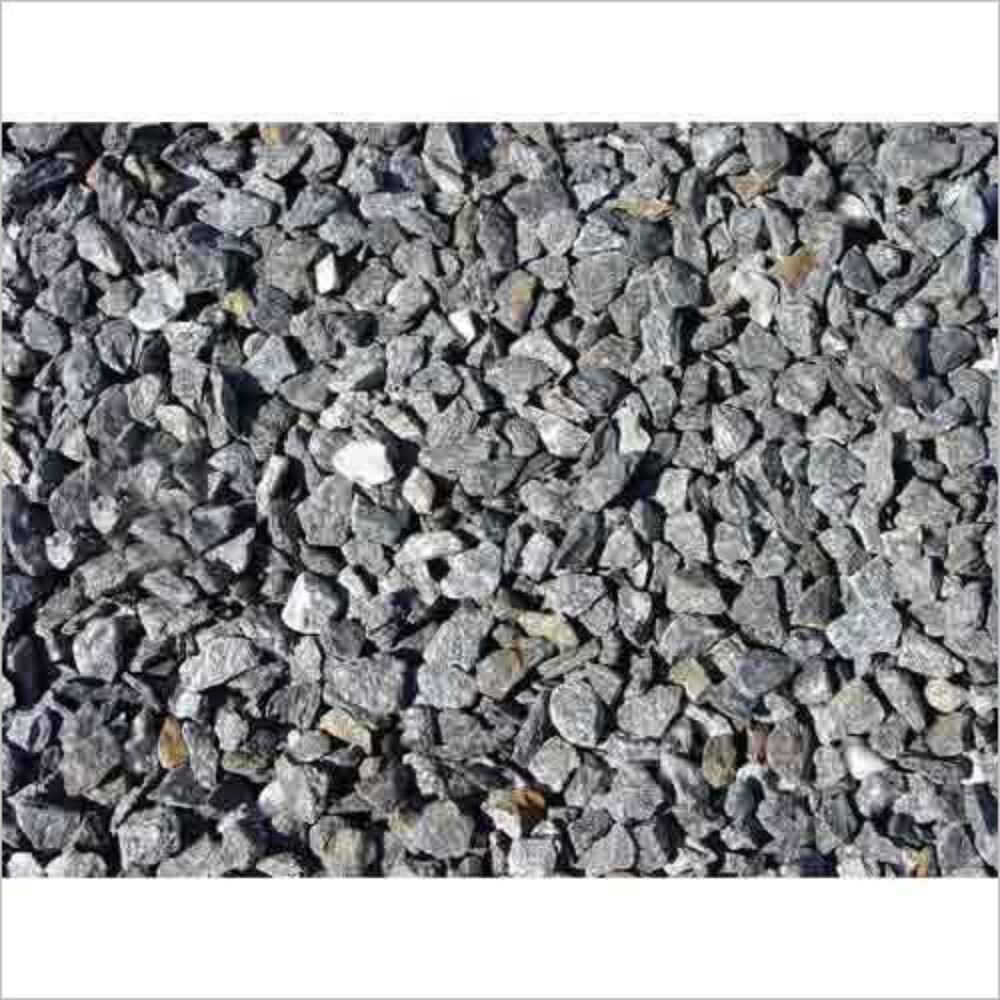
Dolomite Grit is an anhydrous in nature and belong to carbonate mineral. It has chemical formula of CaMg(CO3)2 and contain double calcium and carbonate ions. The solid grit is available in various sizes and shapes with 98% pure composition. This is used in manufacturing of different materials viz. cement, stone, calcined lime and gas reservoir. It is nonhazardous, non-flammable and safe for using. Dolomite Grit has mohs hardness 3.5 to 4 and specific gravity 2.8 to 2.9. moreover, stone grit has black and grey color. This is also used in chemical, agricultural soil treatment and metallurgical flux.
Versatile Particle Sizes and PackagingDolomite Grit is offered in a wide range of particle sizes from 0.5 mm to 6 mm to meet diverse industry needs. It is conveniently packed in 25 kg, 50 kg, or jumbo bags, ensuring flexibility and ease of transportation and storage for different operational scales and requirements.
Exceptional Chemical and Physical StabilityWith an alkaline pH of 9 to 10, Mohs hardness of 3.5-4, and high mechanical strength, this grit exhibits excellent dimensional stability at elevated temperatures. Its bulk density ranges between 1.5-1.8 g/cm3, making it ideal for applications demanding robust and stable refractory materials.
Widespread Industrial ApplicationsDolomite Grit's unique chemical composition (CaCO3: 54-58%, MgCO3: 38-42%) and physical features make it essential in water filtration, glass manufacturing, steel fluxing, agriculture as a soil conditioner, and as a filler in paints and plastics. Its neutral refractory nature allows compatibility with a variety of industrial operating conditions.
FAQ's of Dolomite Grit:
Q: How is Dolomite Grit commonly used across industries?
A: Dolomite Grit is widely utilized as a flux in steel making, a soil conditioner in agriculture, a raw material in glass manufacturing, a water filtration media, and as a filler in paints and plastics. Its versatile properties make it suitable for each of these diverse applications.
Q: What are the benefits of using Dolomite Grit in high-temperature environments?
A: Owing to its neutral refractory character, excellent dimensional stability, and high melting point (approx. 2570C), Dolomite Grit performs exceptionally under high temperatures, maintaining strength and form. This makes it an ideal material for steel, glass, and refractory industries.
Q: When should Dolomite Grit be added in steel or glass manufacturing processes?
A: Dolomite Grit is typically introduced during the fluxing stage in steel production to remove impurities and enhance quality, and during the batch processing phase in glass manufacturing to refine chemical properties and aid in melting.
Q: Where is Dolomite Grit best stored to maintain its properties?
A: For indefinite shelf life and to preserve its low moisture content and mechanical stability, Dolomite Grit should be stored in a dry, well-ventilated area, protected from exposure to moisture and contaminants.
Q: What is the process for using Dolomite Grit in water treatment applications?
A: In water filtration, Dolomite Grit is typically added to filtration beds. Its granular and low-porosity nature helps remove impurities while imparting alkalinity to water, making it effective for pH adjustment and purification.
Q: How does the alkaline nature of Dolomite Grit benefit agricultural soil?
A: With a pH value of 9-10, Dolomite Grit helps neutralize acidic soils, improves soil structure, and provides essential nutrients like calcium and magnesium, thereby enhancing crop yields and overall soil health.







 Send Inquiry

 Send Inquiry
 Send SMS